Migration has been defined as “a socially and politically contentious but economically efficient way of responding to insufficient or over-abundant labour supply” (Reher 2011). As a matter of fact, this phenomenon has always played a crucial role in the demographic, economic, and social development of the world, fostering economic convergence and the reduction of poverty. As a consequence, international organizations such as the International Labour Organization (ILO) have paid close attention to the protection of migrant workers, adapting their approach to the challenges of an increasingly globalised world.
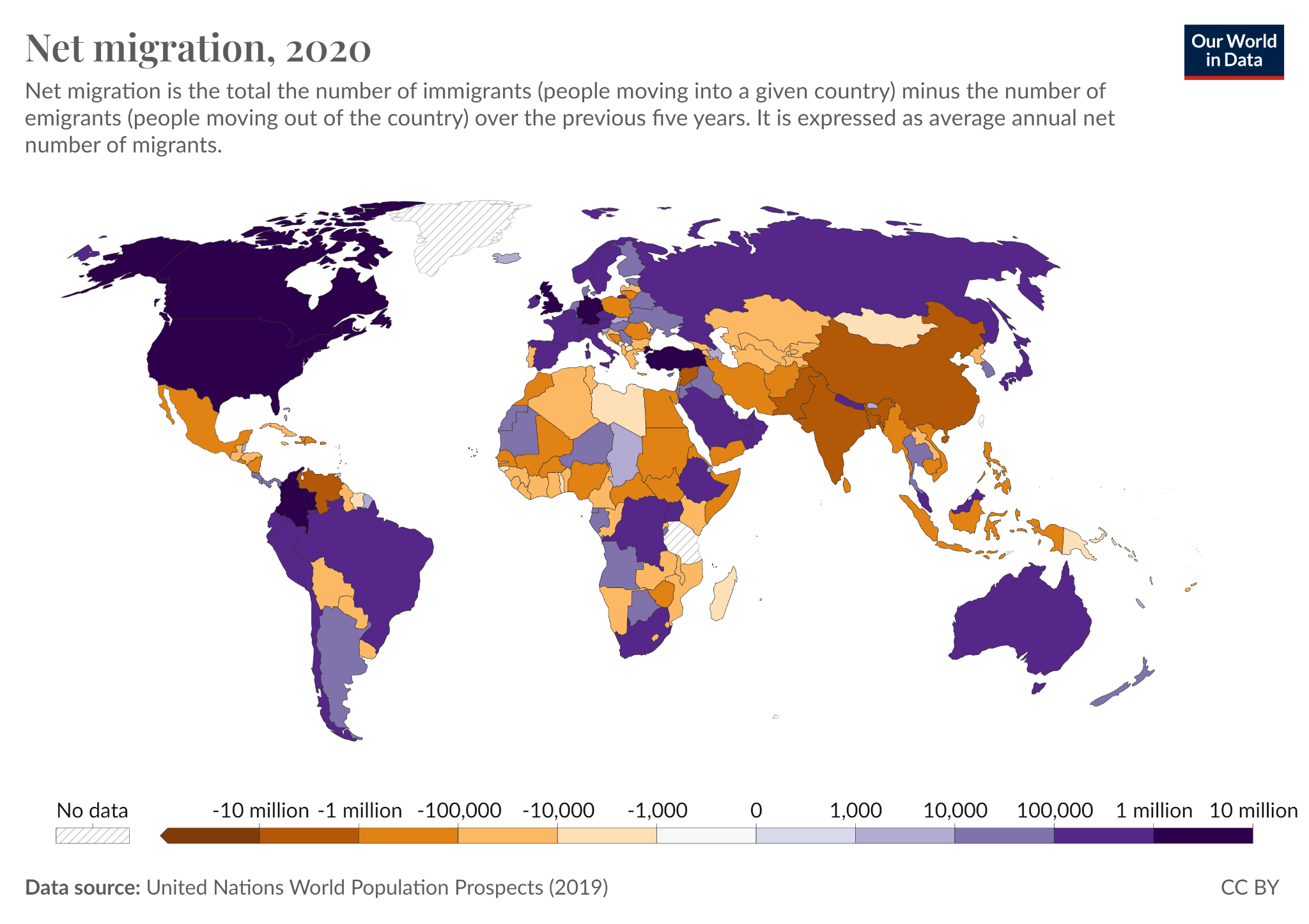
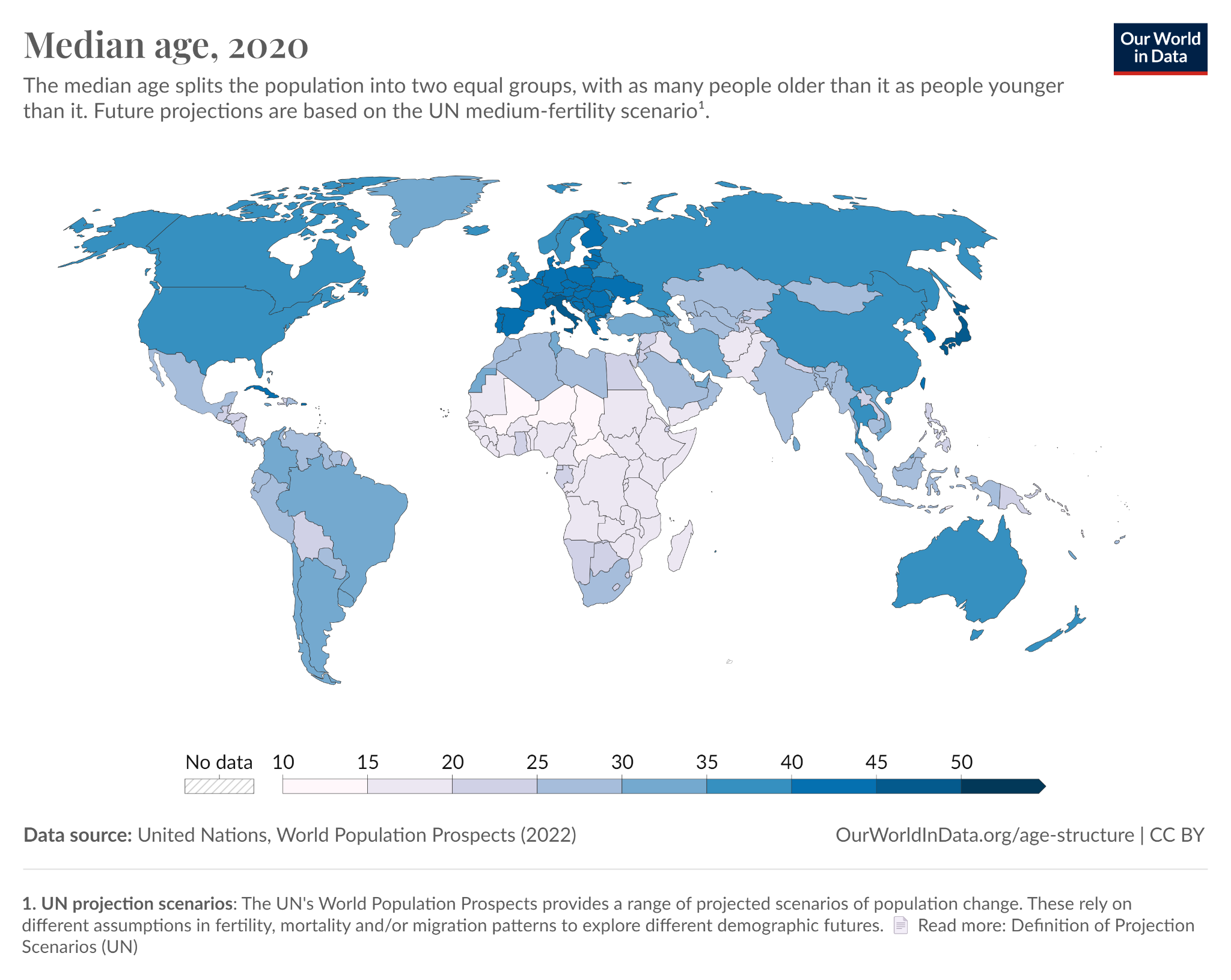
Migration can be motivated by diverse reasons ranging from escaping persecution, conflicts and political instability to searching for better living conditions and economic stability. From an economic perspective, migration can be seen as a compensation mechanism whereby workers from countries with shortages of employment opportunities move to countries with a shortage of labour force. Similarly, from a demographic standpoint, it can be considered a mechanism for population regulation, as people tend move from countries with younger and rapidly growing populations (and thus an overabundance of workers) to countries with older and more stagnant populations. This can be inferred from Figures 1 and 2, which show that countries with lower median age, such as those in sub-Saharan Africa, tend to be the countries with lower values of net migration and vice versa.
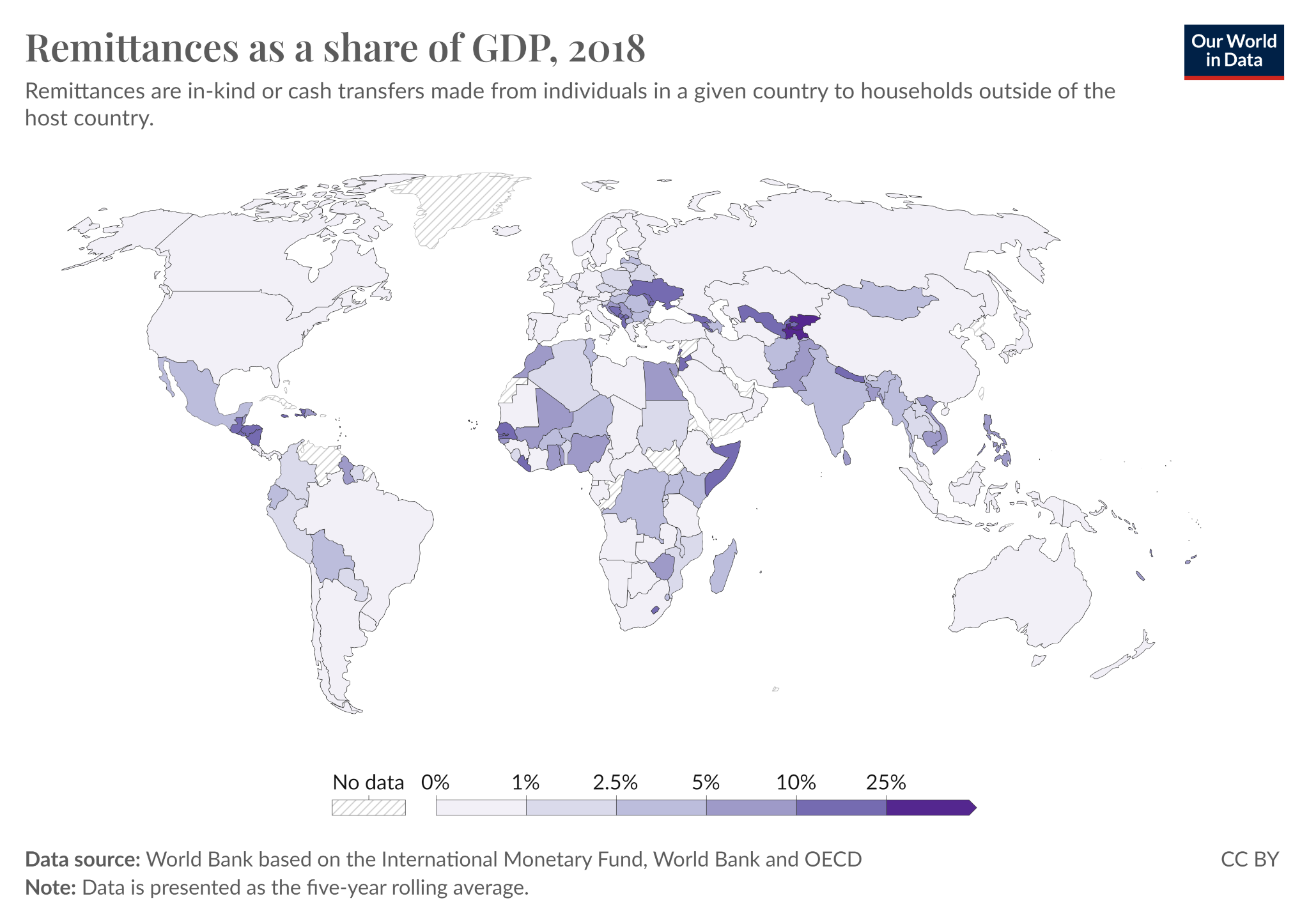
As a consequence, the phenomenon of migration brings significant benefits to both sending and receiving countries. In host countries, the influx of the labour force contributes to the growth and expansion of the local economy, as well as the acquisition of new skills and perspectives. For sending countries, emigration alleviates overpopulation pressures on available resources and improves employment opportunities for those who stay. If emigrants decide to return to their countries, they bring back with them higher human capital and often savings. Furthermore, remittances sent back by emigrants to their families can contribute significantly to the GDP of the country of origin, as shown in Figure 3. For example, in 2018, remittances amounted to 30.51% of Kyrgyzstan’s GDP.
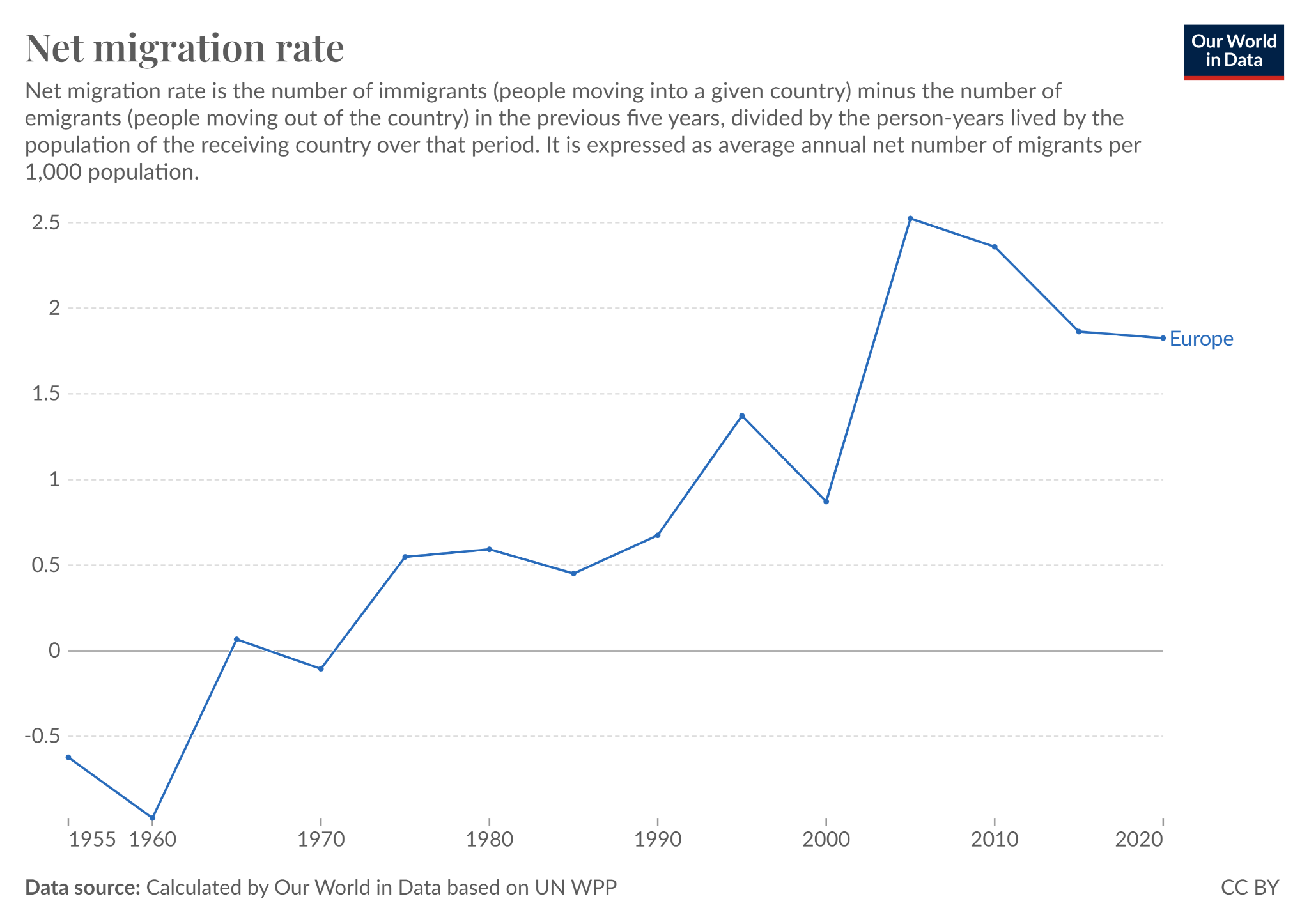
It is also important to notice that the distribution of migratory fluxes has changed from a geographical point of view. For instance, Figure 4 shows the gradual evolution of Europe from a place of emigration to a destination for immigration, as its population growth declined and its median age rose due to the demographic transition.
Over the years, the ILO has consistently prioritised the protection of migrants, particularly migrant workers, acknowledging that they inherently possess certain rights solely by virtue of being workers and that their protection is fundamental for sustained economic growth.
The two most important conventions on the theme are (International Labour Organization 1949) and (International Labour Organization 1975), both stipulated before the 1980s. Nevertheless, shifts in the approach of the ILO have emerged since the 1980s, reflecting the impact of globalisation on the displacement of migrants. In particular, four elements were the key drivers of this adjustment process (Vittin-Balima 2002).
- The discovery of serious discrepancies between national practices and key provisions included in Conventions No. 97 and 143.
- A reduction of the role of the State in orienting labour markets, causing the emergence of profit-making private recruitment agencies.
- A rise in the number of female migrant workers, who currently account for half of the migrant population. Women are particularly vulnerable, as they are particularly exposed to the risk of being recruited as sex workers.
- The modernization of means of transport fosters the phenomenon of illegal migration.
In response to these emerging challenges, the ILO introduced new measures to address the evolving complexities surrounding migration. Notably, the ILO played a significant role in the development of two pivotal conventions adopted by the United Nations.
Firstly, the International Convention on the Protection of the Rights of all Migrant Workers and Members of their Families (United Nations 1990), which was adopted by the United Nations General Assembly in 1990. This convention stands as a landmark initiative aimed at safeguarding the rights of migrant workers and their families on a global scale.
Secondly, it is relevant to highlight the adoption of the United Nations Convention against Transnational Organized Crime (United Nations 2000) on November 15, 2000. This convention, along with its two supplementary protocols, specifically targets the prevention, suppression, and punishment of human trafficking, particularly focusing on vulnerable groups such as women and children. Additionally, it aims to combat the illicit smuggling of migrants across international borders, whether by land, sea, or air.
The ILO acknowledges numerous rights inherent to migrant workers, including freedom of association and collective bargaining, the eradication of forced labour, equality and non-discrimination, and the elimination of child labour (International Labour Organization 2007). The Organization recognizes a direct link between the entitlement of these rights for migrant populations and the development of the countries receiving them. Without the acknowledgement and protection of these labour rights, migrants are unable to unleash their full potential and contribute effectively to the development of their host countries.
For instance, forced labour can have far-reaching negative consequences, including the depression of income levels and hindrance to the formation of human capital, both of which are essential for sustained economic growth. Therefore, addressing issues such as human trafficking becomes imperative as it is intrinsically linked to labour exploitation. Similarly, the eradication of child labour holds significant implications; the ability for children to access education instead of being employed contributes to the development of human capital, which is vital for long-term growth. Moreover, the implementation of anti-discrimination measures is fundamental as it not only enhances the living conditions of migrants and their families but also fosters inclusivity and social cohesion within destination countries. Additionally, these measures play a crucial role in preserving the competitiveness of national workers by preventing the undercutting of labour costs. In essence, by ensuring that migrant workers are granted their rights and protections, societies can mitigate adverse effects on both their economic development and social fabric.
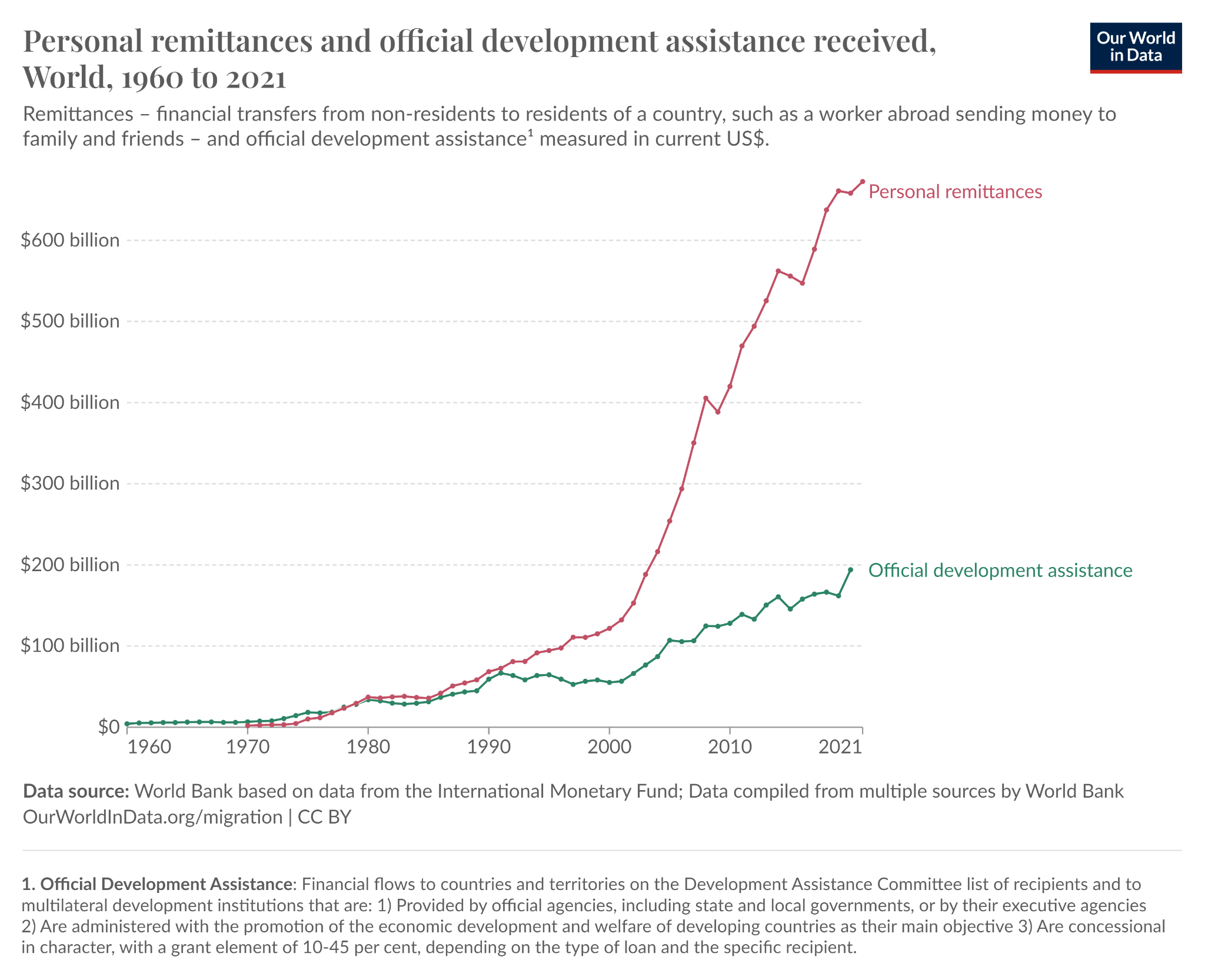
Similarly, the ILO emphasises the idea that migrants hold fundamental importance for their countries of origin. Firstly, migration enables citizens to acquire skills and capital abroad, which can later be reinvested in their home country upon their return. Secondly, the contributions of remittances to GDP are often more substantial than those of development aid (the aid given by governments and NGOs to developing countries in order to support their economic and sociopolitical development). Figure 5 provides an overview of the phenomenon, showing the significant increase in personal remittances relative to the amount of official development assistance.
In conclusion, migration of workers from countries with rapidly growing populations to countries with ageing populations is a rather efficient way of allocating the labour force internationally. Benefits can be reaped by both sending and receiving countries, but only insofar as host countries are willing and able to implement policies that enable the correct integration of migrant workers in their society. Because of this, the ILO has been proactive in fostering international conventions that facilitate the adoption of such policies worldwide, adapting their approach to the challenges that increased globalisation generates.
References
Citation
@inproceedings{chiara_liviano_d’arcangelo2026,
  author = {Chiara Liviano D’Arcangelo, Maria and Muscarà, Federico},
  title = {ILO {International} Conventions on Migrants’ Rights Since the
    1980s},
  booktitle = {Proceedings of the 1st Conference Cycles of Cytopia},
  date = {2026-10-01},
  url = {https://cytopia.fr/liviano2026},
  isbn = {TBA},
  langid = {en}
}